

Yes, though the value looks different in each setting. Schools see the biggest gains in student engagement and lesson reusability, while businesses see the biggest gains in hybrid training participation and presentation efficiency.
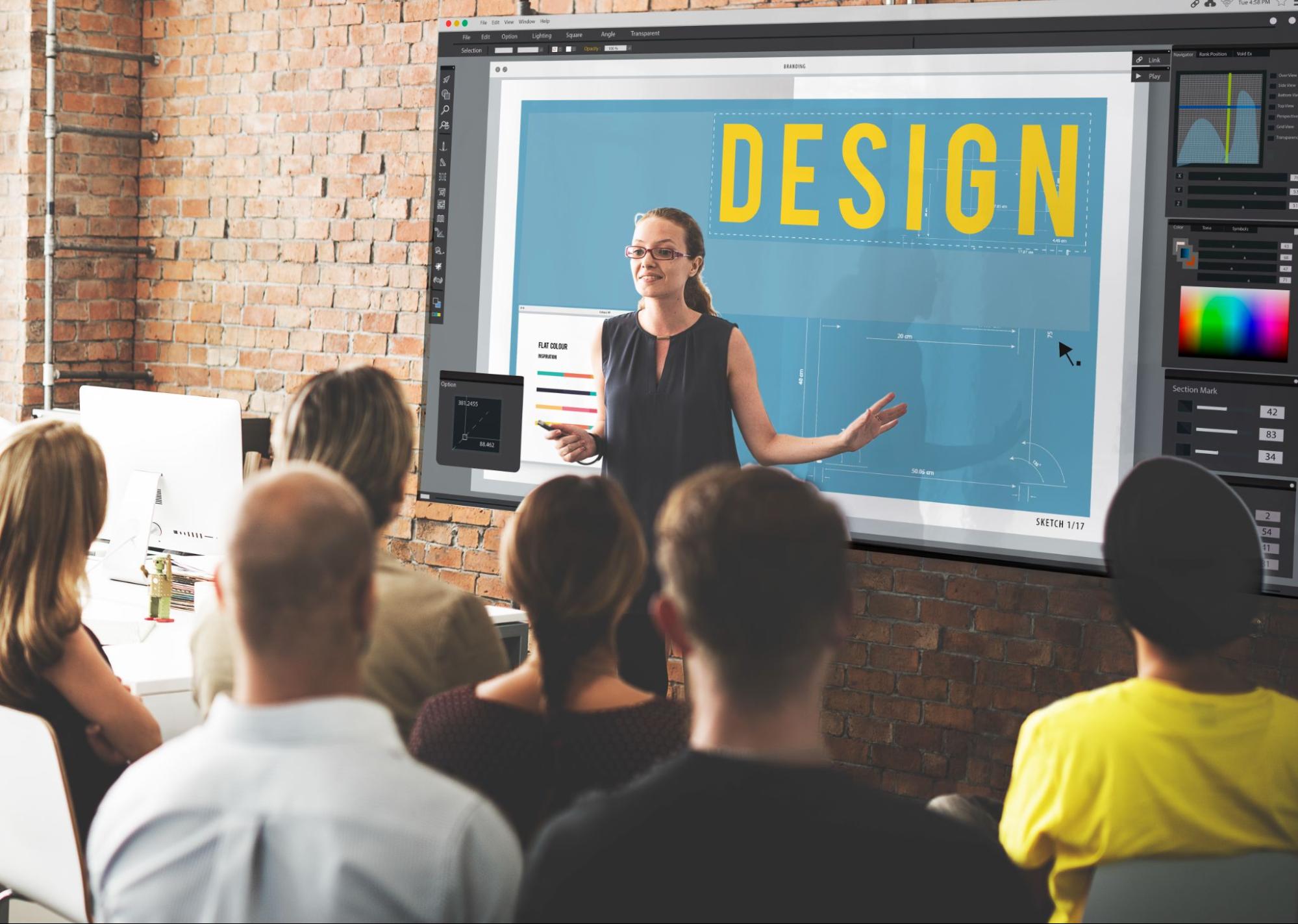
A classroom in 2026 looks nothing like it did a decade ago, and neither does a corporate training room. The chalk-and-marker board has been replaced by a touch-enabled screen that runs lessons, tracks engagement, and connects remote learners in real time. The shift is backed by real market movement: the global interactive whiteboard market is projected to grow from roughly USD 6.5 billion in 2025 to USD 12.84 billion by 2035, a compound annual growth rate of 7.0%, driven by sustained demand across both education and enterprise sectors.
Let’s understand how interactive whiteboards are reshaping classrooms and corporate training rooms differently, what’s driving the shift, and what to consider if your school or business is weighing up an upgrade.
How Interactive Whiteboards Are Changing Classrooms?
In education, interactive whiteboards have moved well past simply displaying content. They now support K-12 education, higher education, and corporate training alike, with schools using them to deliver interactive lessons that make subjects like maths and science more engaging. Annotation, multimedia integration, and real-time collaboration mean a single lesson page can be built once, saved, and reused or updated the following year rather than rebuilt from scratch.
Student feedback backs up the engagement claims. In one classroom study, 23.5% of students named internet access as the most valuable feature of interactive whiteboards, with visual support valued by 19.1% and video content by 12.2%, highlighting just how much students rely on multimedia access as part of the learning experience rather than treating the board as a simple display.
How Are Interactive Whiteboards Changing Corporate Training?
In corporate settings, the story is slightly different. Businesses are adopting interactive whiteboards primarily for meetings, training, and hybrid collaboration, with boards facilitating dynamic presentations, digital whiteboarding, and real-time annotation that support distributed and remote teams. Training departments, in particular, are using these boards to run live workshops where presenters annotate directly on slides, diagrams, or process documents, then export and share the session afterwards.
While interactive whiteboards are transforming collaboration in workplaces, education providers are increasingly integrating them with PA systems for schools to create more connected learning environments. Combining interactive classroom technology with clear school-wide communication systems helps improve lesson delivery, announcements, emergency messaging, and overall campus communication.
The growth in this segment is genuinely strong. The interactive whiteboard market in corporate settings is expected to grow at a CAGR of around 6.4% through 2030, driven by reliance on interactive technologies to support remote collaboration, virtual training, and agile project management. For training-heavy industries especially, this reflects a real shift away from static slide decks toward sessions employees can actively participate in.
Education vs Corporate Training: Key Differences in Use
While the underlying technology is identical, what each sector actually needs from it differs meaningfully.
| Factor | Education Use | Corporate Training Use |
|---|---|---|
| Primary goal | Student engagement and comprehension | Skill development and knowledge transfer |
| Typical content | Lessons, diagrams, multimedia, quizzes | Presentations, workshops, process documentation |
| Group size | Often 20–30+ students | Smaller groups, frequently hybrid or remote |
| Software priority | Curriculum tools, learning platforms | Conferencing integration, productivity tools |
| Reusability need | Lesson plans reused across terms or years | Training modules reused across cohorts and sites |
Understanding this distinction matters before choosing a panel, since a board specified for a packed classroom isn’t automatically the right fit for a twelve-person training room running hybrid sessions.
What’s Driving the Shift in Both Sectors?
A few forces are pushing adoption in education and corporate training simultaneously:
- Hybrid work and hybrid learning: both sectors need tools that connect in-person and remote participants on equal footing, whether that’s a student joining a lesson from home or a remote employee joining a training session from another office.
- Falling hardware costs: while prices for interactive whiteboards typically range from roughly USD 2,500 to USD 6,500 or more, depending on size and specification, the broader trend has been toward more accessible mid-range options as panel and touch-sensor manufacturing costs continue to fall.
- Reusability and efficiency: saved lesson plans and training modules reduce repeat preparation work, compounding in value over a school year or training cycle.
What are the Important Considerations Before Investing?
A board chosen without considering its actual use case rarely delivers the value it should:
- Classroom durability: boards in school settings face far more daily wear and tear than a boardroom display ever will, so build quality matters more than it might for a corporate space.
- Software and platform integration: for corporate training rooms, this is usually the deciding factor, particularly where sessions need to connect remote employees through tools like Microsoft Teams Rooms as part of a broader hybrid meeting and training setup.
- Room size and group size: a board specified for a packed classroom rarely suits a small training room, and vice versa.
- Staff and teacher training: just as important as the hardware itself, since a powerful board nobody knows how to use properly quickly reverts to functioning as a basic screen, undermining the investment regardless of how advanced its features are.
Bottom Line
Interactive whiteboards are transforming education and corporate training in different but equally significant ways. Classrooms are using them to deepen engagement and reuse lesson content efficiently, while businesses are using them to run more participative, hybrid-friendly training sessions. What both sectors share is a growing reliance on technology as core infrastructure rather than an optional upgrade, and getting the specification, software fit, and training right is what determines whether that investment actually pays off.
If you’re considering an interactive whiteboard for a classroom or training room, the smartest first step is a proper assessment of your space and how it will actually be used. At 3 Monkeys AV, our audio visual system specialists run a free $250 AV system analysis for every Perth school and business, matching the right panel and setup to your specific room before any equipment is chosen. We’re WA’s only authorised EduTouch supplier, and every job runs through us directly, from supply and installation to staff training, with clear, itemised pricing and no subcontractors involved. Get in touch with 3 Monkeys AV to find the right interactive whiteboard setup for your classroom or training space.