

Start with your goal, whether that's promotion, wayfinding, or internal communication, then match display brightness, software, and integration needs to that goal rather than choosing hardware first.
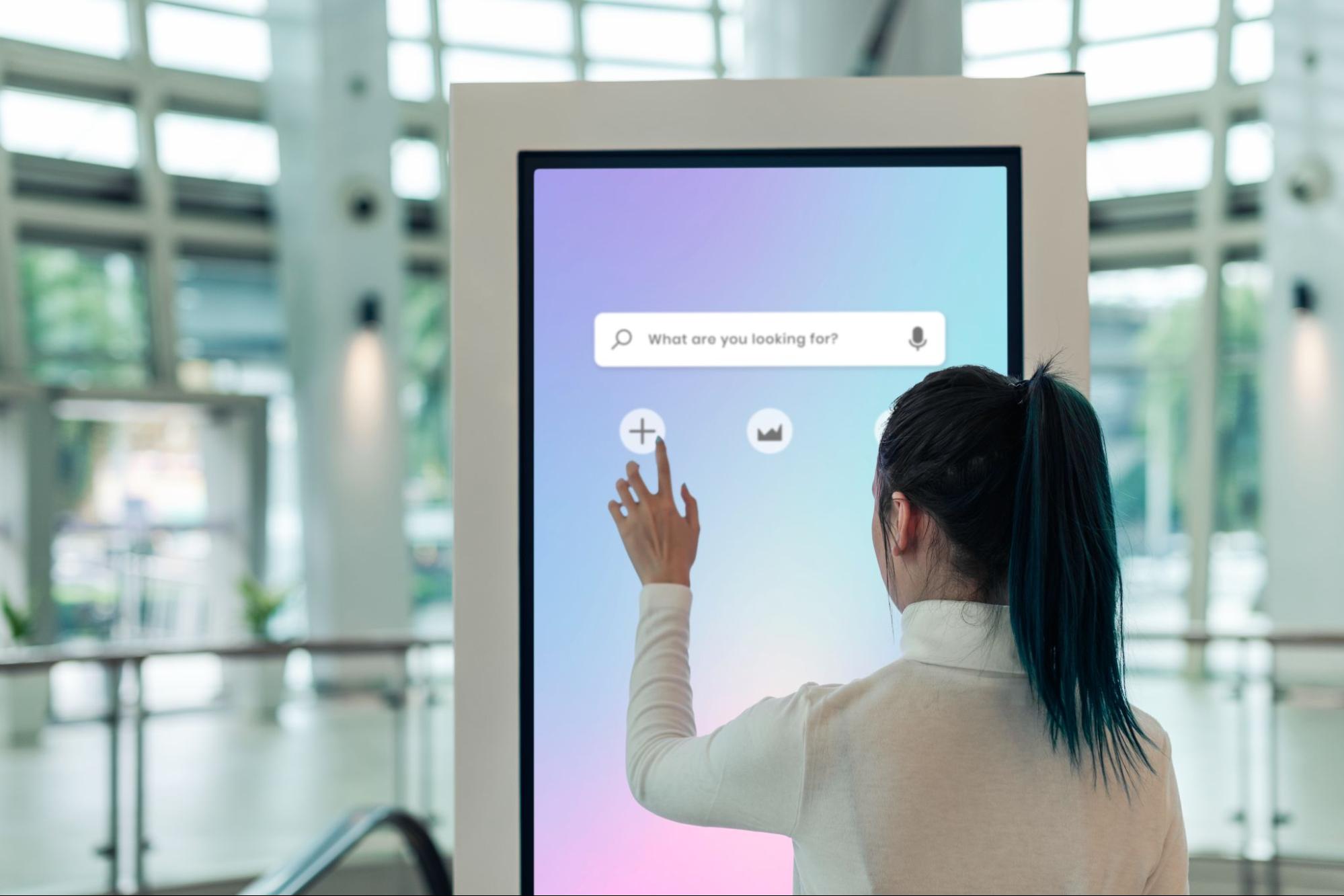
A retail store with the right screen in the right spot sees measurable results: featured products lift unit sales by 32%, according to Nielsen research, and consumers rank digital signage as the advertising medium they trust most, ahead of television, social media, and print. The problem is that most Perth businesses don’t get those results, not because digital signage doesn’t work, but because they chose the wrong setup for their space.
Learning how to choose the right digital signage solution isn’t about picking the biggest screen or the cheapest software. It’s about matching hardware, software, and content strategy to your specific business, audience, and budget. This guide breaks down exactly what to consider before installing digital signage for your Perth business.
What Is a Digital Signage Solution and How Does It Work?
A digital signage solution combines a commercial display, a media player or built-in computer, and content management software that lets you create, schedule, and update what appears on screen remotely. Rather than printing and replacing posters or menu boards, content updates instantly across one screen or hundreds, from a single dashboard.
The shift toward this approach has been significant. Cloud-based content management now accounts for 78% of deployments, compared with 22% still running on-premise systems, reflecting how much easier modern signage is to manage remotely than the static displays it replaced. Getting this part of the decision right is genuinely one of the most important steps in choosing the right digital signage solution for your business.
What are the Key Factors to Consider When Choosing a Digital Signage Solution?
A few factors genuinely determine whether a signage solution performs well or becomes an expensive, underused screen:
- Purpose first: promotional displays, menu boards, wayfinding, and internal communications all need different content strategies and, often, different hardware.
- Display technology and brightness: outdoor or sunlit locations need higher-brightness, durable displays, while indoor retail or office settings have more flexibility.
- Content management software (CMS): This is where long-term usability and cost are decided, not the screen itself, since the CMS is what your team interacts with daily.
- Integration needs: signage that needs to pull from a POS system, booking calendar, or live data feed requires software built for that integration, not a basic playlist tool.
- Network and connectivity: reliable Wi-Fi or wired connectivity is essential for cloud-based content updates and remote management.
What are the Types of Commercial Digital Signage Solutions for Businesses?
The right category depends entirely on the problem you’re solving, not on what looks most impressive in a showroom.
| Type | Best Suited For | Typical Setting |
|---|---|---|
| Standalone display | Single-location businesses needing one or two screens | Cafés, small retail, and reception areas |
| Networked multi-screen system | Businesses managing several locations from one dashboard | Multi-site retail, franchises |
| Interactive touchscreen | Self-service and customer-facing navigation | Wayfinding, kiosks, showrooms |
| Video wall | High-impact visual presence in larger spaces | Foyers, hospitality venues, and showrooms |
What are the Benefits of Digital Signage for Business Growth?
The business case for getting this right is well documented:
- Higher sales on featured products: featured items see a 32% sales lift, according to Nielsen research, when displayed on well-placed digital signage. Nuroum
- Stronger brand awareness: brand awareness climbs an average of 47.7% following digital signage exposure, well ahead of static print alternatives.
- Higher viewer action rates: 76% of viewers take a measurable action after seeing a display, whether that’s making a purchase, joining a queue, or following a prompt.
- Stronger overall customer experience: in hospitality and retail venues, pairing visual signage with the right ambient audio through a properly specified PA system often strengthens the experience beyond what visuals alone can achieve.
- More capable technology at lower cost: AI-powered content personalisation and scheduling is a growing area of investment for signage providers, giving even small businesses access to tools once limited to large enterprise deployments.
What are the Common Mistakes to Avoid When Selecting Digital Signage?
A handful of recurring mistakes catch businesses out:
- Choosing hardware before software: then discovering the CMS doesn’t actually support the displays already purchased.
- Underestimating brightness requirements: for outdoor or sunlit indoor locations, leading to screens that are unreadable for much of the day.
- Skipping a proper content strategy: the screen itself rarely drives results without a clear plan for what’s displayed and when.
- Choosing a provider on price alone: without checking ongoing support and software reliability, which often costs more in the long run than paying slightly more upfront for a properly supported system.
How to Choose the Right Digital Signage Provider in Perth?
Choosing the right digital signage provider in Perth ensures you get a solution that is tailored to your business needs, professionally installed, and supported for long-term performance.
Step 1: Get your space and goals properly assessed.
The right provider should evaluate your location, lighting, and business objectives before recommending any hardware, not the other way around.
Step 2: Check that installation is handled in-house.
Look for a provider who manages installation, network configuration, and content setup directly, rather than outsourcing parts of the job to subcontractors.
Step 3: Confirm ongoing support is included.
Signage networks need monitoring, troubleshooting, and occasional updates well after the screens go live, so support matters just as much as the initial install.
What are the Cost Considerations for Commercial Digital Signage Solutions?
Costs vary considerably depending on display size, software tier, and number of screens. Hardware typically represents a one-time cost, while the content management software is a recurring cost for the life of the network, making the CMS choice more financially significant over time than the screen purchase itself. Falling LED and display prices have made enterprise-grade signage increasingly accessible, with large-format LED display prices having decreased by over 60% in recent years, putting professional-grade signage within reach of small and medium Perth businesses that previously found it cost-prohibitive.
Closing Thoughts
Choosing the right digital signage solution comes down to matching the technology to your actual business goals, not buying the biggest screen or the cheapest software on offer. Purpose, display technology, software, and ongoing support all need to work together, and getting any one of these wrong is usually what turns a promising investment into an underused screen.
If you’re weighing up digital signage for your Perth business, the smartest first step is a proper assessment of your space and goals. At 3 Monkeys AV, we run a free $250 AV system analysis for every Perth business, recommending the right display, software, and setup for your specific location and budget. Our team handles design, supply, and installation in-house, with no subcontractors, and we stay on hand for ongoing support long after your signage goes live.
Get in touch with 3 Monkeys AV to find the right digital signage solution for your business.