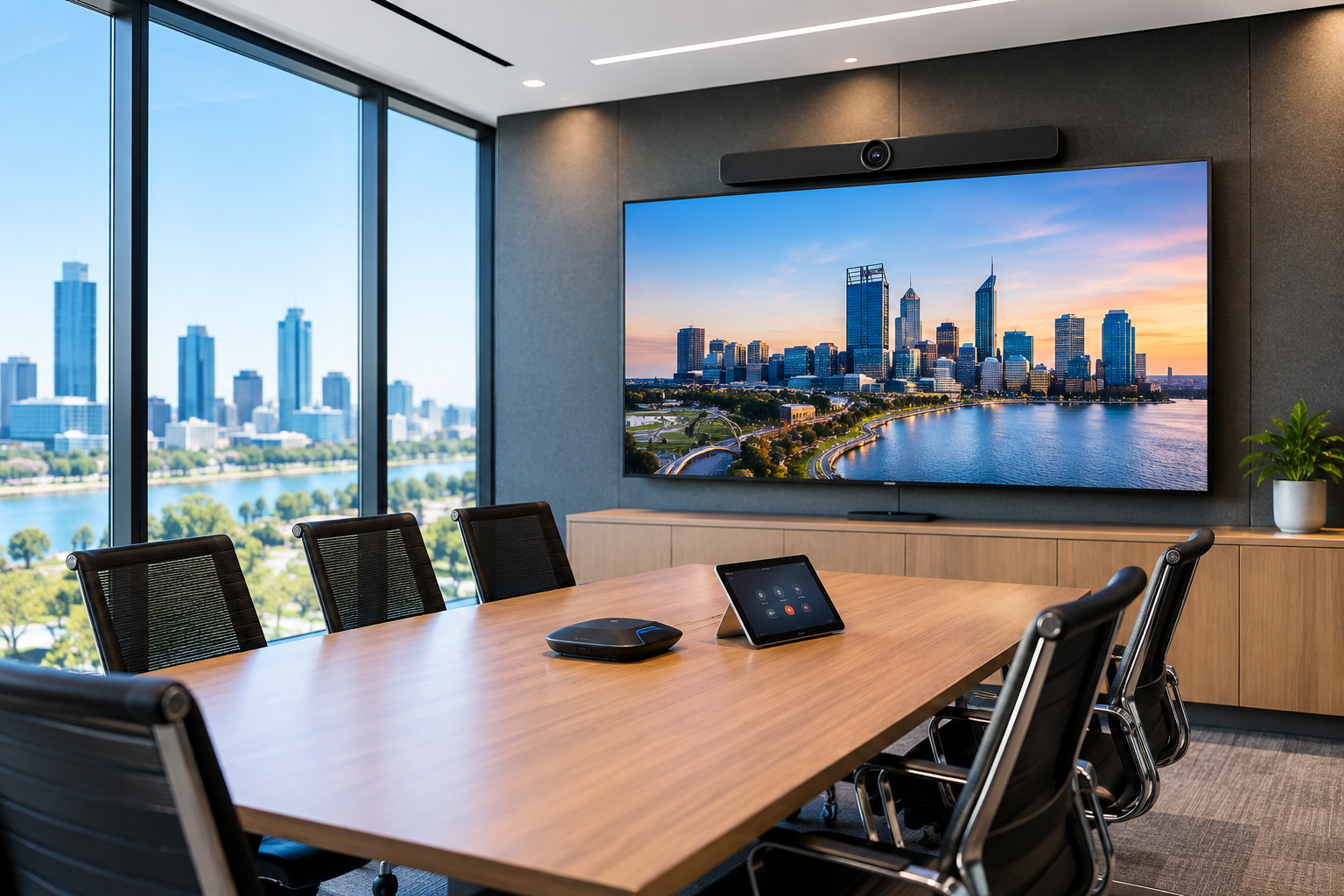
How Do Video Conferencing Companies Help Businesses Build Scalable Meeting Spaces?

By Francis Fragomeni,
Why Businesses in Perth Are Upgrading to Microsoft Teams Rooms in 2026?

A scalable meeting space can grow with a business without a technology overhaul. Video conferencing solutions achieve this with flexible equipment and consistent room designs. The systems can support different meeting sizes and work styles.

According to AHRI’s 2025 Hybrid and Flexible Working Report, 29% of employers in Western Australia mandate full‑time employees to be in the physical office at least four days a week. A majority still operate hybrid or flexible arrangements. So, a well-designed meeting room can make it easier for employees, clients, and partners to join the same conversation, no matter the location. 

What Makes a Video Conferencing Solution Scalable for Businesses?

A scalable video conferencing setup works just as well in a four-person huddle room today as it does across a floor of boardrooms in three years. The key is designing every room on a common platform, so growth means adding rooms, not starting again. Here’s what that looks like in practice:

  1. Flexible room configurations

Each room gets the camera, microphones, display and speakers its size and acoustics need, all built on the same platform. When a room changes use, components can be swapped or added without ripping out the whole system.

  1. Consistent user experience

Staff shouldn’t have to relearn how to start a meeting in every room. Standardising on one platform, such as Microsoft Teams Rooms, with the same touch controller everywhere means one tap to join, whether it’s a huddle room or the boardroom. 

  1. Support for different room sizes

A huddle room might need nothing more than an all-in-one video bar. A large boardroom may need multiple cameras with speaker tracking, ceiling microphone arrays, a DSP and dual displays. A scalable design matches each room to the right tier, without over or under-spending. 

  1. Easy integration

Modern video conferencing systems for businesses can integrate with meeting platforms, room-booking systems, displays and other workplace technology. Rooms then show availability, auto-join scheduled meetings and fit into how your IT team already works. 

  1. Room to expand

A business may add more meeting rooms, or introduce new collaboration technology over time. The initial system design of the video conferencing solution should allow for these changes.

  1. Simple management and support

Once you have more than a handful of rooms, checking each one by hand doesn’t work. Cloud management tools such as Teams Rooms Pro let your AV partner monitor every room remotely, push updates and often fix faults before staff notice them. 

How Do Video Conferencing Companies Design Systems for Different Meeting Spaces?

The best video conferencing companies in Perth start with the room and how people use it. The goal is to match the technology to the room’s size, layout, acoustics, and meeting requirements.

  1. Assess the room

Specialists look at factors such as:

  • Room dimensions to determine camera coverage and microphone pickup range
  • Seating capacity to know how many people need to be seen and heard correctly
  • Table layout for proper camera positioning
  • Natural and artificial lighting to ensure that faces remain visible on camera 
  • Acoustic conditions that affect microphone and speaker performance
  • Display position of the video conferencing equipment
  • Available power and network connections
  1. Define how the room will be used

A two-person huddle room has different requirements from a boardroom for client presentations. Designers consider whether the room will mainly support the following activities:

  • Video meetings
  • Presentations
  • Hybrid meetings
  • Training sessions
  • Team collaboration
  • Large group discussions
  1. Select the right camera setup

Camera choice depends on the room and number of participants. Smaller spaces may only need a single camera whilst larger meeting spaces and boardrooms require wider views or multiple cameras. Additionally, larger rooms benefit from speaker tracking or multiple camera angles.

  1. Plan microphone coverage

In a hybrid meeting, remote attendees judge the whole meeting by how well they can hear. Microphones should be chosen and positioned for the seating layout, so every seat sits within a mic’s pickup zone. Beamforming ceiling or table arrays can focus on whoever is talking while rejecting air conditioning hum and corridor noise. 

  1. Choose suitable displays and audio

Display size in a video conferencing solution should be suitable for the viewing distance and room layout. Larger rooms have remote participants as well. Such rooms would benefit from multiple screens so people can see remote attendees and shared content easily. 

  1. Build a consistent control system

A single touch panel that starts the meeting, selects the source and adjusts volume removes most of the frustration from meeting rooms. Using the same interface in every room means staff learn it once and can walk into any space and get started.

  1. Allow for future expansion

A well-designed system plans for the next stage, whether that’s extra rooms, upgraded cameras, more displays or integration with room booking and building systems. Building in spare cabling, rack space and network capacity now saves major rework later.

A specialist for audio-visual in Perth designs each room around its purpose and maintains consistency in the overall technology.

What Types of Video Conferencing Systems Can Businesses Use?

Businesses can choose from compact all-in-one conferencing bars, complete meeting-room packages or flexible wireless systems. 3 Monkeys AV supplies solutions from leading brands like Logitech, Yealink, Poly, Crestron, Cisco, AVer and Barco. We select equipment in accordance to room size, acoustics, and how the space will be used.

All-in-one conferencing bars

All-in-one bars combine the camera, microphones, speakers and processing into a single unit, making them practical for smaller meeting spaces. For example, the Logitech MeetUp is designed for huddle and small conference rooms. It has an extra-wide field of view, integrated audio and automatic framing. Other options include the Logitech MeetUp 2, Logitech Rally Bar Huddle, and Yealink A20 and A40 Bars.

Complete Microsoft Teams Room systems

For businesses that want a dedicated meeting-room experience, integrated packages are the best option. Packages can combine conferencing bars with a touch controller or alternative room equipment.

The Logitech Rally Bar + TAP IP package supports Microsoft Teams Rooms and can also operate in BYOD or appliance mode. You can add more microphone pods for larger rooms that require greater audio coverage.

Modular conferencing systems

Larger boardrooms may need more than an all-in-one bar. Modular systems can add microphone pods, separate speakers, cameras, and control equipment to extend coverage across the room. Additionally, they have microphone pods available for larger spaces. 

Wireless video conferencing systems

Wireless conferencing systems connect participants to the room’s AV equipment without requiring multiple cables. The Barco ClickShare CX-50 connects laptops to room cameras, microphones, speakers, and displays. It also supports wireless content sharing, touchback, annotation and collaboration across large meeting spaces and boardrooms.

Which system suits which space?

The table below will help you match your meeting space with the ideal video conferencing solution approach

Meeting spaceCommon system approach
Huddle roomAll-in-one video bar or compact room system
Small meeting roomAll-in-one or dedicated room system
Medium meeting roomAdvanced video bar or expandable room system
BoardroomModular AV system with multiple cameras and professional audio
Training roomIntegrated or modular AV with content-sharing features
Large or divisible spaceProfessional AV architecture with multiple cameras, microphones and displays

How Can Video Conferencing Solutions Support Different Business Needs?

Video conferencing solutions support varying business needs because the technology is designed around a company’s workflow. A single meeting infrastructure can support collaboration, presentations, training and communication across locations.

  • Hybrid meetings: Employees can join meetings from the office or remotely. Cameras and microphones help remote participants see and hear the people in the room clearly.
  • Communication between offices: Businesses with teams in Perth, Sydney, Melbourne or regional WA can use video conferencing to communicate without requiring everyone to reach the physical meeting space.
  • Client and supplier meetings: A reliable room setup can provide a more consistent experience when businesses meet with customers, suppliers and external partners.
  • Team collaboration: Teams can share all types of content during meetings. This makes video conferencing useful for everyday project discussions.
  • Training and onboarding: Businesses can use meeting rooms to deliver training to employees in different locations, which is easier with a suitable camera and audio setup.
  • Executive and board meetings: Boardrooms often need stronger audio coverage and displays. The system can be designed to support in-person and remote participants.
  • Growing teams: As a company adds employees or offices, additional rooms can follow the same technology standards. There is no need to create a completely different setup in every room.

What Should Businesses Consider When Choosing a Scalable Video Conferencing System?

Business should look beyond the camera and screen when choosing a scalable conferring system. The system should suit the current meeting environment whilst leaving enough flexibility for future changes.

1. Size and layout of the area

A small huddle room and a large boardroom have different AV requirements. Consider seating capacity, table position, viewing distance, and room layout before selecting equipment.

2. Audio quality

Poor audio can make a meeting difficult even when the video is clear. Microphones should capture voices across the meeting area, while speakers should deliver clear sound without excessive echo.

3. Camera coverage

The camera should provide an appropriate view of everyone in the room. Larger spaces may benefit from wider-angle and multiple-camera or speaker-tracking configurations.

4. Meeting platform compatibility

Check whether the system works with the platforms employees and clients use. This can include Microsoft Teams, Zoom, and similar common conferencing services.

5. Ease of use

Your staff should be able to join a meeting and use different controls without technical assistance. Simple room controls can reduce delays at the start of meetings.

6. Integration with your existing technology

The conferencing system should work with the existing IT technology in the workplace, such as displays, room-booking tools, and wireless presentation systems.

7. Network and connectivity requirements

Video meetings rely on a stable network connection. Businesses should consider bandwidth, wired and wireless connectivity, network security, and IT requirements as part of the system design.

8. Management and maintenance

Larger deployments can become difficult to manage if every room uses different equipment. Centralised monitoring and remote management make it easy to identify IT issues. 

9. Future upgrade options

Technology and workplace needs change. Choose a system that allows components to be upgraded or expanded, not replaced. 

Conclusion

Scalable meeting spaces are built around more than video calls. They combine the right AV tools, software, and room controls for how people work. Working with an experienced video conferencing specialist can help businesses match technology to each meeting space and create a consistent experience across rooms. Meetings then become easier for employees and their rising collaboration needs.

What Can Go Wrong When Video Conferencing Equipment Is Installed Without Professional Setup?

By Francis Fragomeni,
When Video Conferencing Equipment Is Installed Without Professional Setup

A video conferencing room looks simple from the outside: a camera, microphones, a display and a meeting room computer. In practice, small installation mistakes show up in every call. A camera mounted too high, microphones placed without regard to the seating plan, or a codec on a congested network leads to clipped speech, echo, frozen video and meetings that start ten minutes late.

Professional installation means every component is chosen to work together, configured for your network, and tested on Teams or Zoom before handover. That matters because most workplaces now run a mix of in-room and remote attendees.  AHRI’s 2025 research found that 29% of employers required full-time staff onsite four days a week, which still leaves a day where many meetings include people dialling in.

Below, we cover the most common problems caused by poorly installed video conferencing rooms, and how a proper installation fixes them.

What Can Go Wrong With Incorrect Video Conferencing System Installation?

Poor installation can turn a business meeting room into a source of technical interruptions. This leads to misunderstandings amongst colleagues and lost productivity. The most serious problems occur when equipment is selected without considering the room’s size, acoustics, lighting, furniture, network, and software platform. Here are the main consequences:

  • The camera’s field of view does not include all the participants.
  • Voices sound distant or distorted.
  • Echo from incorrect speaker and microphone placement creates confusion.
  • Incorrect camera placement prevents participants from seeing what they should.
  • Displays show the wrong input or no image at all.
  • Wireless presentation works inconsistently.
  • Touch controllers or room-booking panels fail to communicate with the system.
  • Network and device configuration issues lead to unstable calls.
  • Employees start using their personal laptops because the room system is difficult to use.
  • Productivity suffers as the IT staff troubleshoots video conferencing equipment.

Professional video conferencing installation services ensure that your existing AV systems and network infrastructure integrate fully with your conferencing platforms. Professionals from 3 Monkeys AV also provide optional training to your team so that the system works smoothly in future meetings. 

What Are the Most Common Video Conferencing Installation Problems?

Most problems related to video conferencing equipment setup occur when the installation does not focus on designing a complete meeting-room experience. The following are typical problems businesses face: 

  • Incorrect camera positioning: A camera mounted above a tall display, or off to one side, gives remote attendees a view of foreheads and empty chairs. Mounting it close to eye level and centred on the table keeps everyone in frame and makes eye contact feel natural. 
  • Inadequate microphone coverage: Every microphone has a set pickup pattern and range. If mics aren’t specified and placed for the actual seating layout, people at the far end of the table sound distant or drop out completely.
  • Incorrect placement of speakers: Speakers too close to the microphones feed sound back into the call, causing echo for remote participants. Aiming them at glass walls or hard surfaces adds reverberation that makes speech harsh and hard to follow. 
  • Unmanaged cabling: Loose cables under tables and behind displays get kicked, unplugged during cleaning, or strained at the connector. Properly routed, secured and labelled cabling keeps the room reliable and makes future servicing faster. 
  • No compatibility among AV components: Mixing cameras, mics and room computers that were never tested together leads to USB bandwidth limits, resolution mismatches between the computer and display, and devices the conferencing app can’t recognise. Certified, matched components avoid these conflicts from day one. 

How Can Incorrect Equipment Setup Affect Audio and Video Quality?

Incorrect video conferencing equipment setup prevents participants from responding to the discussion. Hard-to-hear participants hinder communication and this results in disengagement.

Audio problems

Audio is often more important than video. Remote participants may tolerate a less-than-perfect image, but they cannot contribute if they cannot hear the discussion.

ProblemLikely causeEffect on the meeting
EchoSpeaker audio picked up by nearby microphones Participants hear their own voices repeated
Muffled speechMicrophone is blocked or is too far from participants Remote attendees ask people to repeat themselves
Uneven volumePoor microphone placement or lack of coverageSome people are clear while others are difficult to hear
Background noiseMicrophone positioned near HVAC outlets, doors or busy walkwaysParticipants are unable to follow the conversation
Harsh or distorted soundIncorrect speaker placement or audio processingListening becomes tiring

Video problems

Video quality can suffer when there are issues in the camera positioning. It causes the following problems:

  • The camera is positioned outside the ideal viewing angle.
  • Lighting is directed behind participants rather than towards their faces.
  • The display or camera uses unsuitable resolution settings.
  • The camera is mounted where furniture or room dividers obstruct the view.
  • Auto-framing settings are not configured for the room.
  • The camera cannot capture both the presenter and participants.
  • Screen sharing is connected to the wrong input.

How Can Poor Video Conferencing System Installation Cause Connectivity Issues?

Poor video conferencing system installation can cause connectivity issues when devices are not correctly connected to the network. They must also be connected to the right power supply and to one another. The result of connectivity problems is dropped calls and missing audio or room controls that don’t respond.

Network configuration

Many conferencing systems depend on stable network access for meeting connections. With regular firmware updates and calendar integration, the conferencing platforms work properly. A system may be physically connected but still unreliable in the following cases:

  • The network port is inactive.
  • The device is placed on the wrong VLAN.
  • Firewall rules block required traffic.
  • The wireless signal is weak or congested.
  • Network quality varies significantly during busy periods.

Power and cable faults

Intermittent power or poorly secured connections can cause a room system to restart. In the middle of the meeting, it can lose its display signal or disconnect peripherals. HDMI and USB cables may also fail to give you a stable signal if they are too long or damaged. They must be suitable for the required resolution.

Wireless presentation issues

Wireless systems in any workplace need proper configuration. Their integration with the network access and display is essential. If the wireless presentation device is not properly connected to the display or conferencing peripherals, users may share a screen but keep struggling to share room audio or video. Wireless system testing should cover the following scenarios:

  1. Join a scheduled meeting from the room controller.
  2. Call a participant.
  3. Share the screen
  4. Switch between room and laptop audio
  5. Use the camera when sharing content
  6. End the meeting and return the room to its normal state.

How Can Professional Video Conferencing Equipment Setup Prevent These Problems?

Professional video conferencing system installation treats the meeting room as a connected system in the office. A good integrator follows a set process from first site visit to handover:

  • The installer reviews the size of the room, furniture, and seating capacity.
  • Display location, viewing distance, power availability and network access are assessed.
  • The right video conferencing equipment is chosen that matches the room’s size and acoustics. 
  • Professional installers install all the audio and video systems correctly. They ensure that each component is integrated with each other. 
  • The video conferencing system is configured to the business’s chosen platform, user accounts, calendar, room name and security requirements.
  • While planning the video conferencing equipment installation, the professionals leave enough room for managing upgrades and identifying faults.
  • After testing each component and system, the installers provide a quick demonstration. They provide device information and a clear support process.

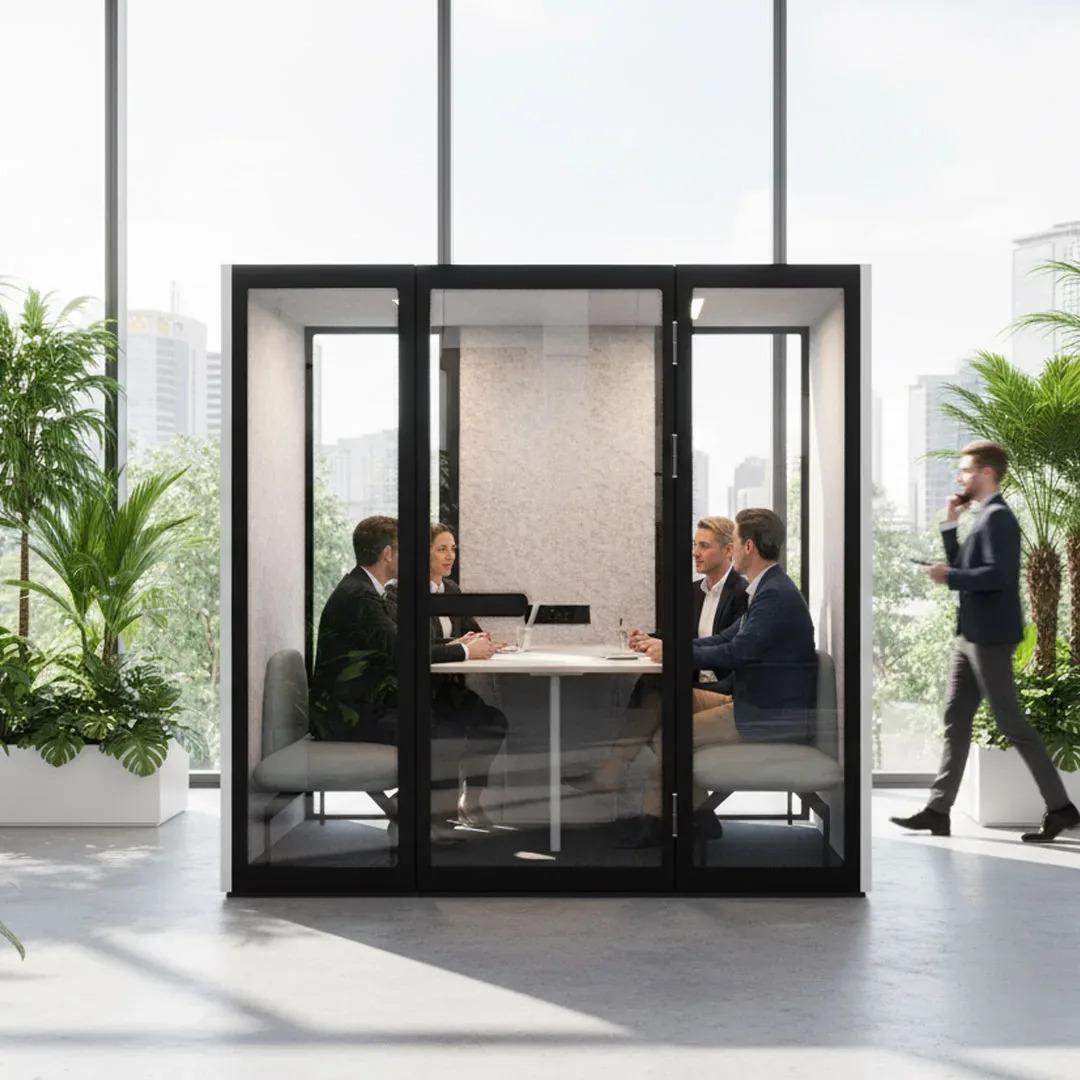
An experienced AV specialist will also look beyond the equipment list. In a noisy open-plan office, that might mean recommending acoustic pods for workplaces or a simpler all-in-one conference bar. The goal is a room your team can walk into and start a meeting without calling IT.

Closing Thoughts

Installing video conferencing equipment without professional planning causes frustrating meeting experiences. These issues do not stem from one device alone. They occur when your equipment does not match the room or has not been tested as a part of a complete system.

Professional video conferencing equipment installation helps you select suitable technology and position it correctly. The experts configure the platform and validate real meeting scenarios. Businesses get custom solutions and proactive support for all issues related to video conferencing. 

3 Monkeys AV provides video conferencing solutions for small to big meeting rooms. We provide Logitech conferencing products, Tap controllers, and ClickShare wireless presentation systems to optimise your collaboration. Our team is ready to help you whenever you need.

How Can Office Pods Help Businesses Manage Noise Without Redesigning the Entire Workplace?

By Francis Fragomeni,
Office Pods Help Businesses Manage Noise

Office pods manage noise by offering freestanding quiet zones. You get a private space without knocking down walls or changing your floor plan.

Open-plan layouts are a common sight across Perth’s commercial hubs. From St George’s Terrace to West Perth, businesses love the collaborative vibe they allow. But high noise levels can quickly ruin employee focus. This does not require a costly retrofit. You can install office pods for noise reduction into your existing layout. They give staff a quiet place to work or take calls instantly.

How can office pods help reduce workplace noise?

Acoustic pods for offices trap and block sound. High-density acoustic materials like Mass Loaded Vinyl (MLV) and acoustic PET stop noise from getting in or out of the space. In Perth, many local companies have busy sales floors and open workstations side-by-side, creating a high level of background chatter. 

Acoustic pods use sound-absorbing fabrics and double-glazed glass. When a worker steps inside, the loud office fades away. This setup prevents loud talkers from distracting the whole floor. It gives focused workers a silent retreat. Acoustic office pods by 3 Monkeys AV can be customised with different sizes, layouts, and finishes to suit the branding and needs of any workplace. 

So, when you add office pods for noise reduction to your floor plan, you control acoustics where you need it most. Here is the technology that allows office pods to reduce workplace noise:

  • Soundproof structure made of thick exterior shells and sound-absorbing insulation.
  • Acoustic panels prevent sound waves from floating within the closed space.
  • Sealed construction using noise-isolating ventilation systems.
  • Double-glazed glass for better speech privacy.

What makes soundproof office pods different from regular meeting spaces?

Soundproof office pods are highly engineered and require zero construction. Traditional meeting rooms need builders and permits and are built with permanent drywall and construction. In contrast to regular meeting rooms that require electrical work and ventilation, soundproof office pods are pre-built. They are plugged straight into a standard power outlet. This is a huge advantage for businesses on commercial leases.

FeatureModular Office PodsRegular Meeting Spaces
InstallationFast, plug-and-play setup.Requires builders and council permits.
PortabilityMoveable. Take it to your next Perth office.Permanent. Left behind when your lease ends.
AcousticsA fully sealed room, greatly reducing noise.Noise often leaks through the ceiling grid.
CostsFixed pod price with low cost installation.Expensive build and electrical work.
Capacity 1 to 6 people Designed for bigger group gatherings

You can also equip your acoustic pods with various add-ons, such as audio-visual equipment for virtual meetings. As one of the top video conferencing companies in Perth, 3 Monkeys AV lets you add BYOD video conferencing solutions to your pod. They come with a mini display, a webcam, and a docking station for quick plug-and-play access. 

Where can businesses use office pods for noise reduction?

You can place office pods in open-plan work floors, near busy corridors, in breakout zones, or inside unused corners.

Commercial and industrial rents are at a premium across Welshpool, Osborne Park, and the Perth CBD. Businesses must maximise every square metre without putting a stop to daily operations. You can place pods exactly where noise peaks in your workplace.

  • Between open-plan desk clusters: Pods act as acoustic buffers between teams. Staff can get inside for important calls without disturbing their neighbours.
  • Near reception and client waiting areas: They offer private spaces for quick consults or confidential onboarding in the front foyer.
  • Adjacent to kitchen and breakout zones: Placing pods near social hubs blocks out the clatter of food and beverage utensils. They prevent lunch chatter from spreading into work bays.
  • On industrial or warehouse floors: Mining and logistics hubs place pods inside warehouse offices for a dust-sealed and quiet booth for team check-ins.
  • In dead hallway space and alcoves: Narrow office alcoves and end-of-hall spaces often go unused. A compact pod turns a dead floor area into a functional private meeting nook.

What types of workplace noise can office pods help manage? 

Office pods block out loud phone calls and collaborative chatter. They muffle noise emanating from office machinery like computers and printers. 

Many businesses need to deal with overlapping sounds. Mining and engineering companies often have constant video calls with remote Pilbara sites. This creates continuous and loud talking. 

High-quality acoustic pods for offices absorb these loud voices. They also block out the hum of air conditioning and heavy foot traffic. When you step inside, you get immediate relief from the harsh workplace distractions.

How can businesses add office pods without redesigning the workplace? 

You can assemble office pods in a space and plug them into a standard wall socket. There is no need to move existing desks or tear down walls. The space-saving design of the pod maximises space and integrates into any workplace layout.

Office pod units are freestanding with simple levelling feet or heavy-duty castors. You just measure a gap on your floor plan and have the pod assembled on-site. Usually, the experts from the office pod showroom will help you set up the pod properly in the available space. Here are some ways to add pods without redesigning the entire workplace:

  • Place pods in underused spaces like empty corners and wide corridors.
  • Choose freestanding pods and move them wherever you want to create a private space like furniture.
  • Use office pods with built-in power strips and USB ports to prevent the need for getting electrical work done. 
  • Create functional zones in a massive open space by placing acoustic office pods. 

What should businesses consider when choosing an office pod for noise reduction?

Office pods should have certified acoustic ratings for speech level reduction. They should have multi-layered acoustic panels and double-glazed soundproof glass. The pods enhance the efficiency of your office’s space by providing ample room to work. Consider the following factors when choosing office pods:

  • ISO 23351-1:2020 acoustic rating for speech privacy and 25 dB to 30 dB rating of noise reduction
  • Pods should be made with thick panels and sound-absorbing interior upholstery.
  • Office pods should fulfil your technology needs with add-ons like built-in video conferencing equipment
  • To enable employees to stay productive for long hours, pods should have comfort features like adjustable desks, ventilation, and power outlets.
  • You should be able to customise office pods’ exterior aesthetics and interior features to suit your workplace design and branding. 

Closing thoughts

As teams grow or move, traditional open-plan offices limit flexibility. The noise problem has increased with the rise of hybrid work and video calls. But with acoustic pods, you can fix it immediately without expensive renovations. Adding modular quiet zones protects your team’s focus and keeps your lease agreements intact.

At 3 Monkeys AV, we specialise in high-quality, soundproof pods that provide the perfect quiet workspace. We set up and install 1 to 6-person office pods with integrated lighting and ventilation. Contact us for expert advice and assistance.

What Are the Most Common Audio Visual Problems Businesses Face and How Can They Be Prevented?

By Francis Fragomeni,
Most Common Audio Visual Problems Businesses Face

Several of the most common AV problems businesses experience can include; poor sound quality, unreliable video, connection failures, and incompatible devices. Often controls can be confusing, and video conferencing can become faulty when a meeting starts. These problems can be reduced through proper AV system designs. Systems installed by professional AV specialists and regular maintenance both contribute to a seamless experience with reduced problems. Additionally, if an issue should arise, there is professional support available.

Reliable audiovisual technology has become particularly important with face-to-face and remote collaboration in workplaces. Recent Transport WA research found that 44% of employed survey respondents in Perth worked from home at least once a week. This type of flexible working environment makes it significant for meeting rooms to provide consistent audio, video and conferencing experiences for everyone.

What Are the Most Common AV Problems Businesses Face?

Typical AV problems businesses face involve audio quality, displays, connectivity, video conferencing, system control, and compatibility between devices. A small fault can quickly derail meetings and communication with clients or remote employees.

  • Poor or inconsistent audio: Most audio complaints come from microphones that don’t suit the room, or a system with no acoustic echo cancellation, so remote callers hear themselves back. A properly tuned DSP with ceiling or table mics placed for the seating plan gives everyone the same clear pickup, whether they’re at the head of the table or the far end.
  • Displays that will not connect: A laptop may fail to appear on a meeting-room screen because of faulty cables, incorrect inputs, adapters, software settings or incompatible connections.
  • Video conferencing failures: Rooms built from consumer webcams and USB speakers often drop out, or connect to Teams on one laptop and fail on the next. Certified Microsoft Teams Rooms or Zoom Rooms hardware joins the meeting with one tap and is managed and updated centrally, so it works the same way every time.
  • Poor camera positioning or image quality: A camera mounted too high or off-centre leaves remote participants looking at the tops of heads or half the table. Correctly positioned cameras utilise auto-framing or speaker tracking, so whoever is talking is clearly in view. 
  • Wireless presentation problems: Wireless sharing tends to fail on busy corporate networks, guest Wi-Fi restrictions, or when Mac and Windows users each need a different app. A dedicated wireless presentation system configured with your IT team works the same for every device, without installing software. 
  • Complicated control systems: A stack of remotes for the screen, camera and audio is the quickest way to make staff avoid a room. One touch panel that turns everything on, selects the source and joins the call puts the whole room behind a single button. 
  • Equipment compatibility issues: Mixing brands and generations of equipment leads to firmware conflicts, audio drift and features that only half work. An experienced AV integrator designs the room as one system, choosing components that are tested together before anything goes on the wall. 

Specialists in audio visual solutions in Perth use top AV brands that they have tested personally to minimise audio-visual issues. Businesses can seek expert advice to prevent problems that consistently cause issues in their AV infrastructure.

What Causes Audio Visual System Problems?

Most audio-visual system problems are caused by poor system design and incorrect installation. Incompatible technology and infrastructure that isn’t properly maintained cause recurring AV issues. Common underlying causes include the following:

  • Equipment is unsuitable for the size or purpose of the room.
  • Microphones or speakers are positioned incorrectly.
  • Insufficient network bandwidth for video conferencing
  • Outdated firmware and conferencing software
  • Damaged HDMI, USB or network connections
  • Incompatible equipment from different manufacturers
  • Changes to the room that don’t match the changes to its AV setup.
  • AV equipment is at the end of its service life.
  • Inadequate ventilation causing AV hardware to overheat.
  • Ill-maintained systems
  • AV systems that have not undergone testing.

A technically capable audio-visual system can be problematic if employees are not able to use it. In turn, it increases the burden on the IT staff. This is significant in Western Australia as businesses keep investing in digital capability. The WA Government’s 2024–25 Digital Transformation Round provided nearly $1.6 million in funds to 77 Western Australian businesses. Supported projects include software integration, hardware procurement, and automation.

How Can Businesses Prevent Common Audio Visual Issues?

Businesses can prevent most audiovisual system problems by having reliable systems installed. They should keep up with the changing AV technology and standardise the one they use in the meeting rooms. Preventative maintenance and making systems easier to run also impart a better user experience. The most effective preventative measures for AV challenges include:

Design the system around the room and its users

An AV specialist should assess how the space will be used before recommending equipment. Room dimensions, acoustics, lighting, seating layout, and conferencing requirements should influence the design.

Use compatible commercial-grade equipment

AV components should be selected to operate reliably together. Commercial equipment is generally better suited to frequent workplace use. It has greater options for integration and ongoing support.

Standardise meeting rooms where possible

Employees learn easily when similar conferencing technology is used in all rooms. Businesses benefit when employees can start meetings in multiple workspaces.

Test network performance

Modern conferencing and wireless presentation systems depend on business networks. It’s why specialists in video conferencing installation in Perth make adequate bandwidth and appropriate network configuration a part of AV planning.

Schedule preventative maintenance

Inspect and test AV systems before something fails. Servicing software routinely can identify damaged cables, firmware issues, deteriorating hardware and configuration problems before they disrupt an important meeting.

Keep software and firmware current

Conferencing platforms and connected AV hardware change regularly. Updates should be managed carefully to keep security and compatibility strong.

How Can Businesses Troubleshoot Common AV Problems?

Businesses can troubleshoot common AV problems by checking simple causes related to power, cables, input settings, network connections and device permissions. Should these measures fail, more complex hardware or configuration issues may be present, and this is when professional AV assistance is beneficial.

Confirm the equipment is powered and connected

Check all AV control and conferencing systems for power. There should be no loose power cables, disconnected HDMI leads, or damaged USB connections, as they result in serious faults. 

Check the selected input and output

A blank screen or silent room is often a routing issue, not a fault. Confirm the touch panel or display is on the right input, then check the audio settings in Teams or Zoom. Laptops often switch to their built-in mic and speakers instead of the room system, especially after a dock or USB device has been reconnected.

Reconnect cables and adapters

Loose HDMI and USB-C connections cause many dropouts, especially on table boxes that get bumped every day. Reseat the cable at both ends, and if the image still flickers or won’t appear, swap in a known working cable. Cheap or unbranded USB-C adapters are a common culprit, because many don’t fully support the video output the display needs.

Check software permissions and device settings

Windows and macOS updates can quietly reset camera and microphone permissions, so Teams or Zoom suddenly can’t see the room’s devices. Check the privacy settings on the computer first, then confirm the correct camera and microphone are selected inside the meeting app.

Test the network connection

Frozen video and robotic audio usually point to network performance issues, not faulty AV gear. Check whether other users are affected at the same time. Meeting room systems perform best on a wired connection, ideally on a network your IT team has prioritised for voice and video traffic.

Restart the affected equipment

Often, a full power cycle clears most temporary software faults for AV components. Turning the system off from the touch panel or power sequencer when possible, wait 30 seconds, then power back up. If you’re restarting units by hand, turn amplifiers on last and off first to protect the speakers.

When Should a Business Upgrade Its AV System?

A business should upgrade its AV system when equipment no longer supports current software and creates frequent support requests. Business growth and change also demands a closer look at the current AV systems and technologies in place. Here are the signs that indicate your technology is not meeting the needs of the business:

  • Frequent equipment failures.
  • Poor audio or video quality compared with current workplace expectations.
  • Displays that do not support modern connection standards.
  • Input devices like cameras and microphones provide inadequate coverage.
  • Difficulty in integrating video conferencing platforms with AV systems.
  • Complex controls that staff struggle to use.
  • No availability of replacement parts or manufacturer support.
  • Growing maintenance costs.
  • Meeting rooms that no longer suit the organisation’s hybrid working requirements.

In many cases, an upgrade does not mean replacing the entire audio-visual system. A professional AV assessment helps identify opportunities to retain suitable components while upgrading selected components.

Conclusion

Most AV failures trace back to two things: a room that was never designed as a complete system, or equipment that hasn’t been serviced or updated since installation. The good news is that many everyday issues with sound, displays and connections can be fixed quickly once you know where to look.

For long-term reliability, treat your meeting rooms and presentation spaces as business-critical infrastructure, not standalone gadgets. Matched, certified equipment, a tidy installation and regular preventative servicing will prevent most of the problems covered above.

3 Monkeys AV designs, installs, supports and upgrades commercial AV systems for businesses, schools and venues across WA. We’ve been a locally owned and operated Perth AV integrator since 2008, so when something goes wrong, our team is close by.